This is a letter to myself to remind me about my priorities.
We should be focusing on making Starter Story a whole lot better.
Not courses, not YouTube videos, not interesting tweets.
We should be 99% focused on creating an insanely valuable website and resource for users.
Our only goal: Help people start and grow their business. Help them better. Help them more.
It’s so easy to get caught up in things other than your mission. Revenue, traffic, press, ego, funding, employees, “calls”, “partnerships”, going on podcasts, looking good to others in your industry. Status games!
I’ve been thinking a lot about this lately.
Personally, I’d like to care less about all of this. I wish I was a bit more detached from all this “industry” stuff, and it’s something I’m always working on.
Our goal should always be to create something that is amazing for USERS. Our users are not on Twitter. Everything we do, every decision we make, we must be thinking HARD about the user.
If we stay focused on this, we will grow bigger than ever. And in the end, have more “status” than we would if we played “status games” in early days.
Luckily, we’re in a position where we can do this, right now. We are profitable and can allocate resources effectively to our mission. I am very grateful for that.
We don’t need to do too many “money grabs”.
With every decision and project, let’s ask ourselves:
Is what we are working on going to improve the website? Improve the user experience? Make our database and pages more accurate and useful? Will it help someone out there start a business?
Here’s a trend I’m seeing on Twitter recently. These kind of “influencer” guys posting tweetstorms that get thousands of likes and RTs…
Part of me feels jealous. I spend a lot of time on Twitter and try to share valuable things, but I don’t have results like that.
I see some guy sharing a bit of cringey, surface-level advice on personal productivity and getting massively rewarded on the platform…
“Here are 10 things I learned in my 20s…”
And that hurts a bit. At some level, I want those results, too. I want the fame and the glory and the thousands of RTs.
But I also can’t see myself sharing this “mainstream” advice which I can only describe with the word “basic”.
It’s just kind of sad that Twitter is becoming like this, or at least that kind of thing is entering into my circle every time I go on the platform.
I unfollowed a bunch of people recently just because I don’t really want to see this thing. There is some envy at play here, but also, this “content” is not of value to me at all. In fact, it’s probably a detriment to my own success.
But there’s always a balance. To avoid the bullshit, I’ll probably also miss a lot of valuable things…
I just hate to see it because it’s so clearly a “tactic”. The content is posted to be optimized for likes and retweets, but it’s not really optimized to provide value.
That’s the bigger problem with social media. That people are rewarded for what they say not what they do.
The LA Marathon was moved to May, so I'm finally getting back started with my marathon training.
I was kind of dreading it, but now that I've run a few days, I'm remembering why I love training so much.
It gives me a tiny feeling of purpose every day. Every night, I go to bed and check what I have to do the next day. I plan my day around my training.
I have a hard rule that I can never go under on my training. If I have to run 5 miles, 4.9 is not enough. I'll run around the block at the end if I need to.
Here's my spreadsheet for training. I always use Hal Higdon for training schedules.
I love working from coffee shops, and I’ve missed it for so long. I’ve been going to Panera bread every morning for the last week.
A nice mix of folks here, all doing different things. Some old folks chatting, some young kids studying, a realtor meeting his clients, someone reading the paper, etc.
The energy here is so much more productive than working from home. I can’t stand working from home.
I do have a chip on my shoulder... When you bootstrap, you get laughed at... I never took it personal and I never held a grudge. But it's motivating.
With my business, it's hard to get recognition, and that motivates me.
One funny story is: I connected with an executive on LinkedIn, and later went to SXSW. I saw that same executive was going there. So I said to him: 'We should meet up'. We scheduled a 2PM time to meet.
At that time, I didn't have any money. I was staying an hour outside of Austin at a motel. And I drove into SXSW through the rain to go meet this individual. And... he never showed up for the meeting. And at 2:05PM I got a text message that said 'Hey, I had to do something. If you see me on the street, feel free to say hi'.
And I actually taped that person's business card to my wall in my office... Just to motivate me.
And the funny thing is. Years later, that person lost their job and got intro'd to me and interviewed to help work at our company.
I, of course, didn't mention it. And he was totally respectful. And very smart. It wasn't a fit, and I didn't not hire him because of what happened, but my point is that as an entrepreneur I still want more recognition for our platform. And some people still do think it's a joke. And I still get denied for certain things that I want to. That pushes me to keep going.
Love this podcast with Evan Britton, the creator of Famous Birthdays (1B pageviews/year).
Whether you’ve got a full-time job, or you’re running a bigger business, this could be an easy side project to:
(1) make some money selling knowledge you already have, and
(2) grow your audience by helping others
You’re just selling your notes
Do you already take notes and do some writing for yourself? Well, this project is essentially just open-sourcing your notes to the public.
I realize there is more work than this... but not much.
Also, knowing you may open-source your notes can be motivation to write better (and become smarter).
You can validate in days
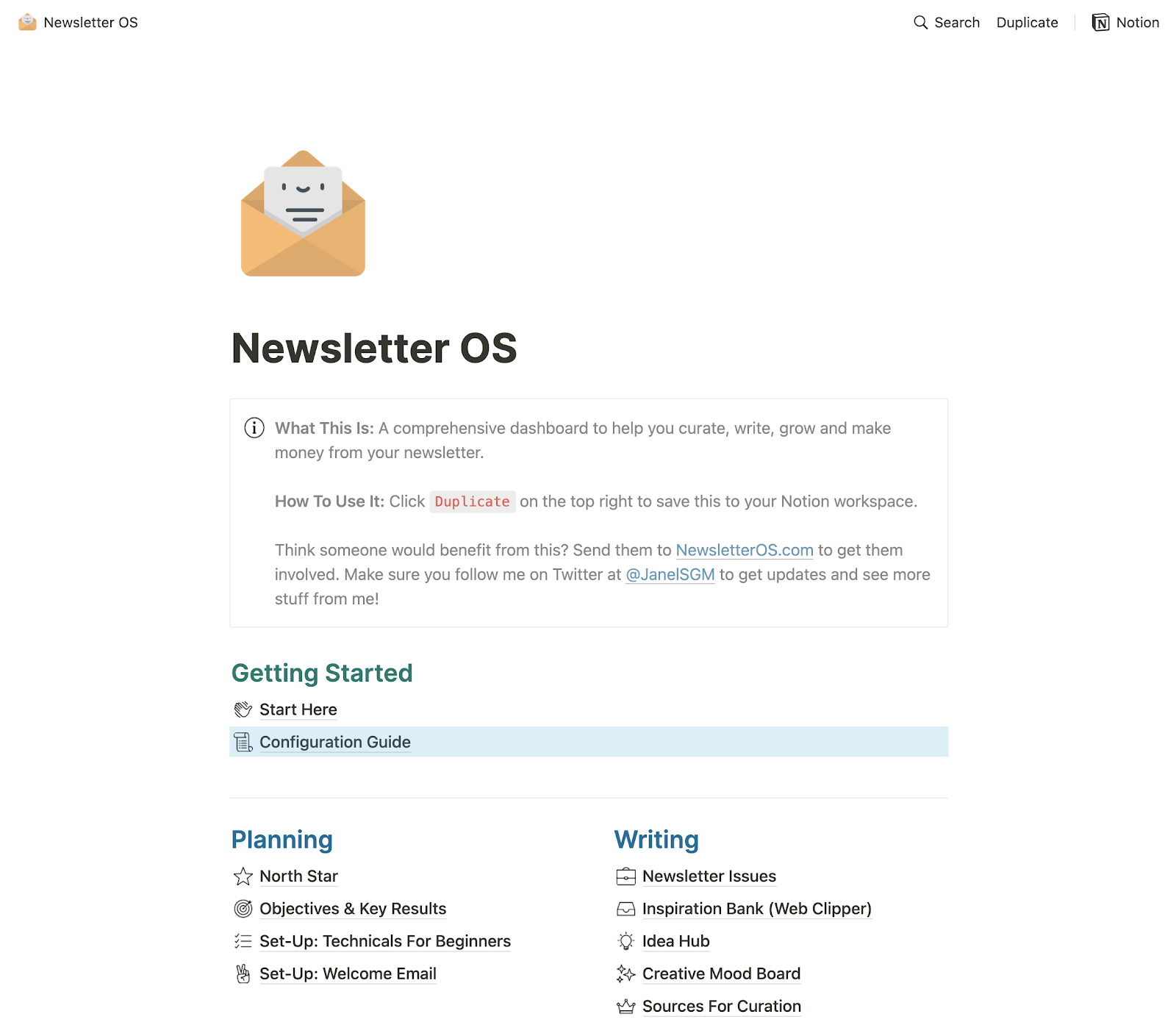
I don’t even think you need to spend 150 hours as Janel did.
As long as you’re an “expert” in some small, specialized topic, you could start selling & validating in a few days.
And even better, your “wiki” is a work in progress, being updated as you go. As you promote and sell, you can add more stuff, create fancy graphics, etc.
It’s “open source”
What I also like about this project is that it has the benefits of open source.
By using a tool like Notion, you can invite friends, collaborators, and more experts to improve the content.
Easy to repurpose content
Don’t have an audience? Well, the content of the wiki will build your audience.
Take your notes (or the pages) and repurpose them to YouTube, Twitter, TikTok, or even when someone emails you a question about XYZ.
It’s a good SEO play
And lastly, you can have lasting sales with SEO. You can convert your Notion project to a website with something like Super.
That way, customers can find the content of the wiki directly through search engines and then buy the product to get the “full suite”. Try to collect emails on these pages.
I spent this morning writing down some thoughts on focus. This is just a 2-minute read. Hope you like it, and feedback appreciated.
In my opinion, focus is the single most important aspect of starting and growing a business.
This goes for all companies, at all stages. It doesn’t matter if I’m one guy with a laptop in a coffee shop, or I’m running Apple… Being focused is still priority #1.
What do I mean by focus?
Focus means: Thinking about and executing on “one thing” only.
During our best working hours, we should spend 90% of your mental and physical energy on this “one thing”.
If we have 10 different “one things”, then we’re not focused. It doesn’t mean we won’t be successful, but it does mean we can’t reach our full potential.
Why it’s so hard to focus on one thing
Focusing on one thing is the exact opposite advice we hear from everyone around you.
Everyone has new ideas and priorities for us: Friends, investors, books you read... they will all say:
“Try this thing. Do that thing. Hire this person. You’ll regret it if you don’t.”
As a leader pushing a company forward, our objective is to politely disregard 95% of this. In one ear, and out the other.
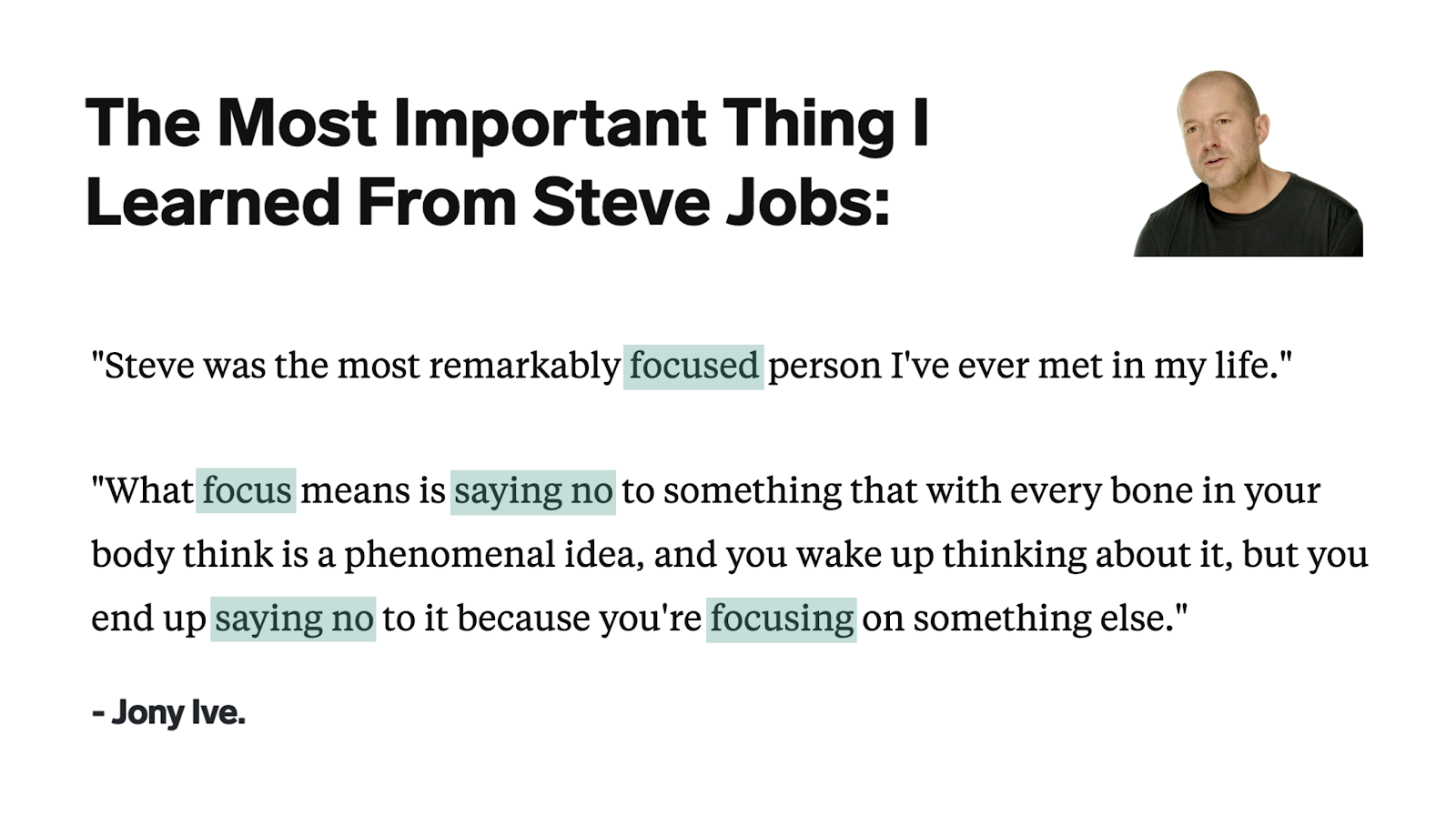
But this is way easier said than done. Take it from the creators of the 3rd most valuable company in the world:
Our insane focus might look bad to others
When we have “a lot of things on your plate” or “a lot of priorities”, you appear busy, high level, and important.
And most people (incorrectly) associate being busy and high level with being successful.
Therefore, our insane focus might actually look “bad” on the surface, especially to employees, investors, and customers.
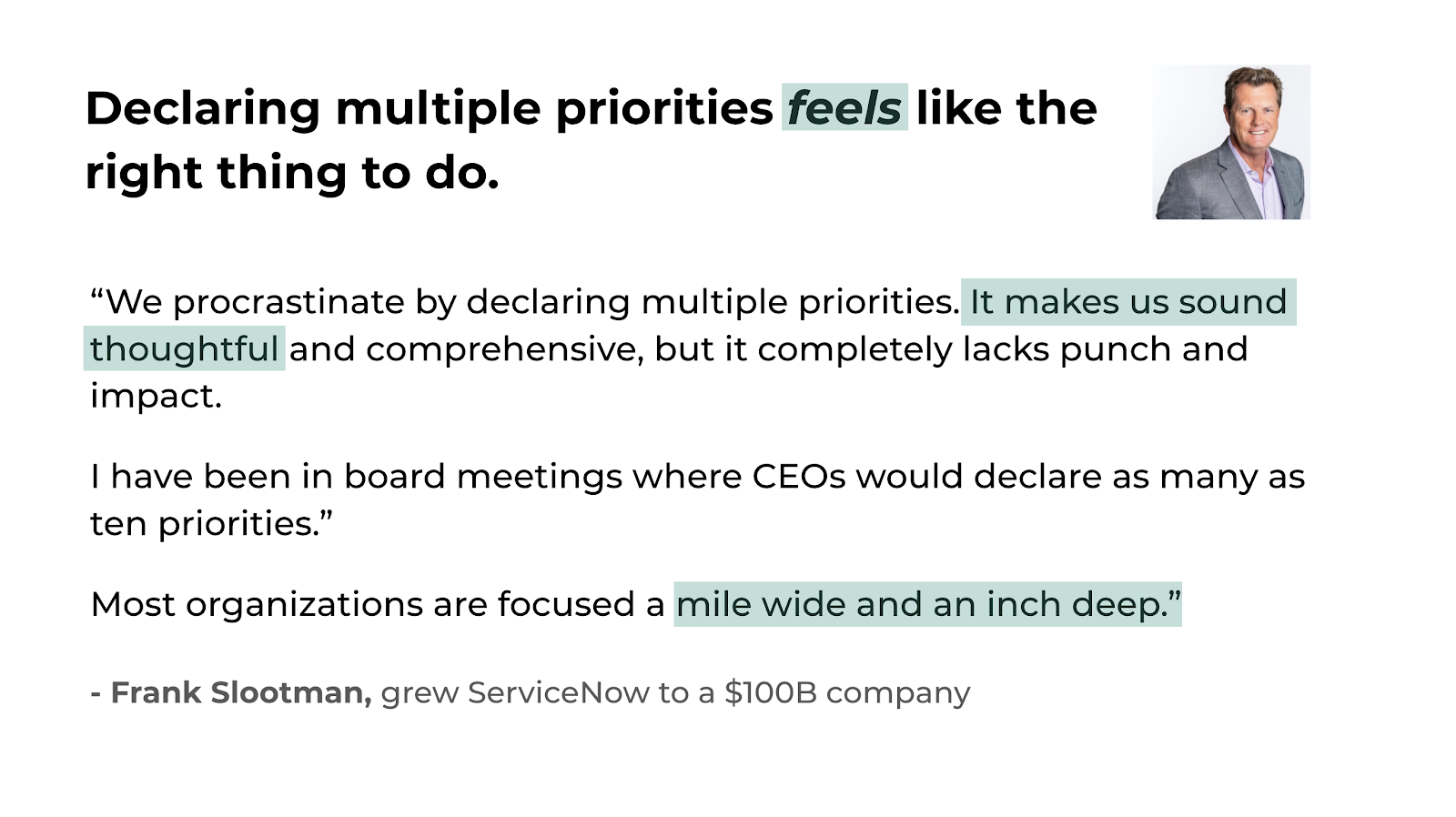
This can lead to criticism. I believe this is why so many leaders lack focus:
Premature De-focusing
I believe many founders “de-focus” too early.
Often, we’ll reach some goal, and once it’s “conquered”, we’ll move on to the next thing, or the next priority.
But this is where we need to stop and think:
“Can I go deeper? Can I focus more?”
We might actually just be scratching the surface of what’s possible.
Harry Dry, the creator of Marketing Examples, is a great example of this:
Harry’s only priority: write amazing content. Once he reached 10K subscribers, he didn’t stop or move on to different priorities, like a YouTube channel, hiring people, etc.
He just focused harder, and deeper. He kept writing more, and better.
Now, he’s well on his way to 100K subscribers, and one day, 1M subscribers.
Successful vs. really successful
The most interesting part of all of this:
Being unfocused won’t lead to failure, it will just lead to less success with more work.
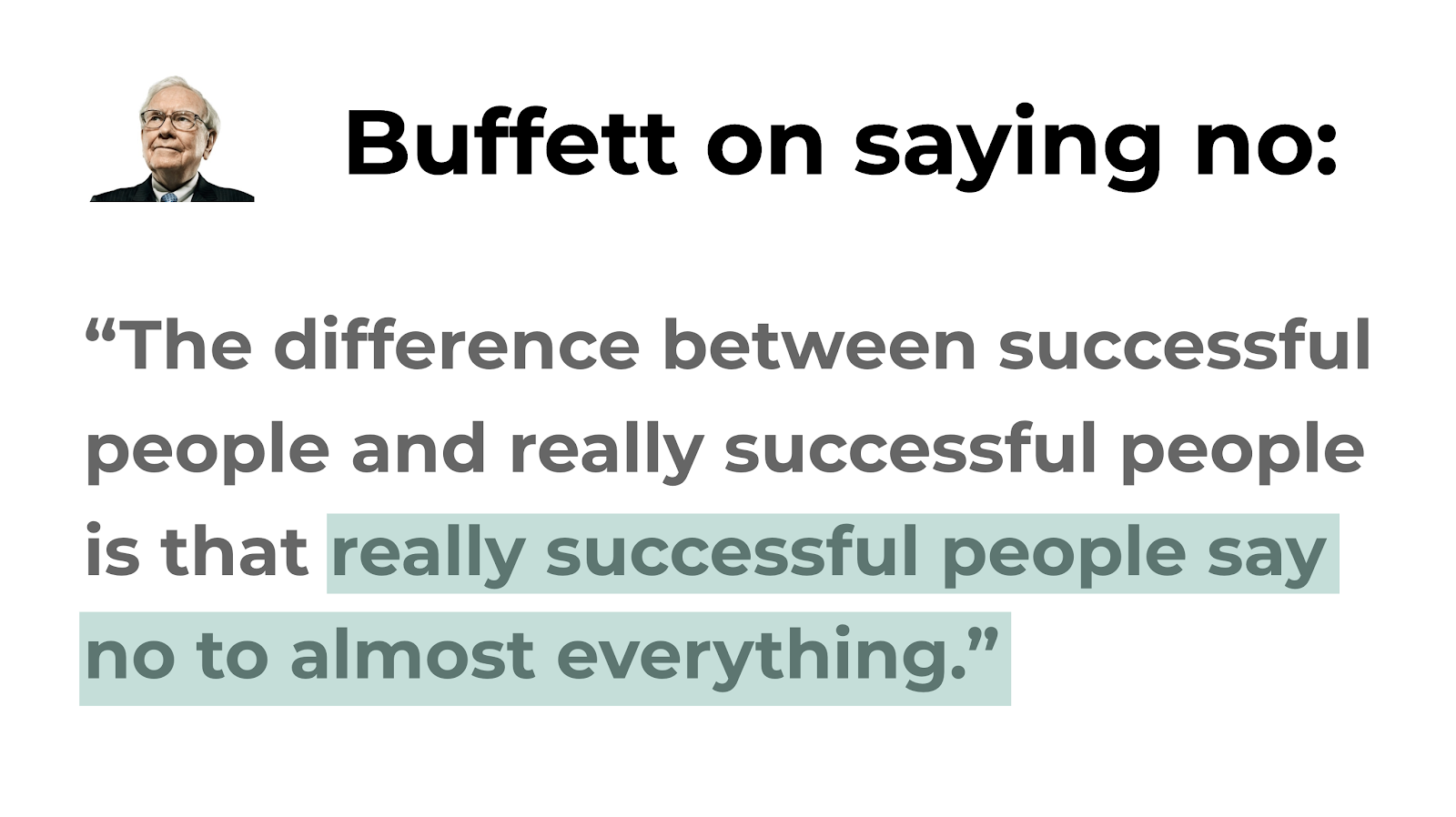
According to Warren Buffett, it’s the difference between successful and really successful:
One of my goals for 2021 is to get better at keeping receipts and tracking business expenses.
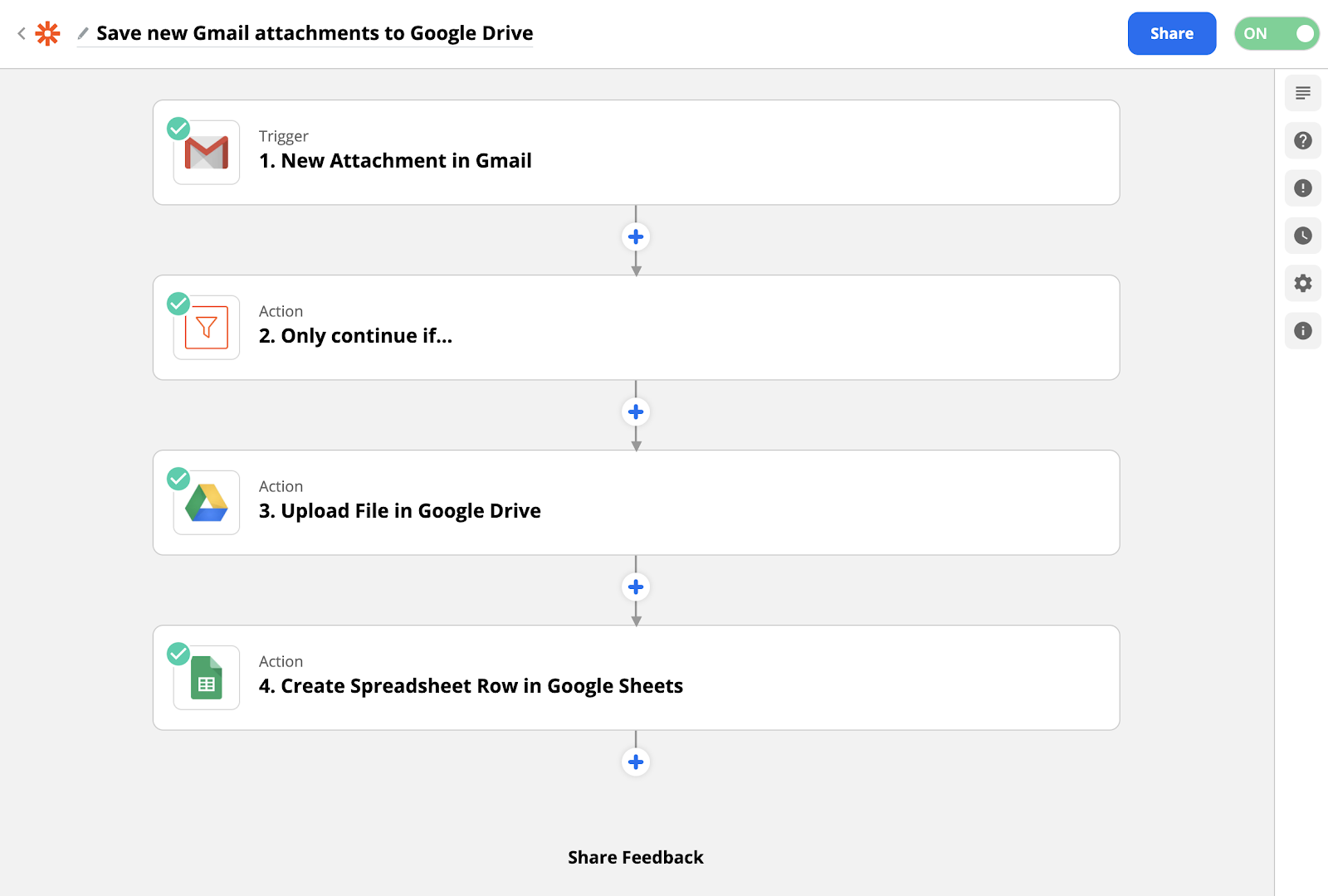
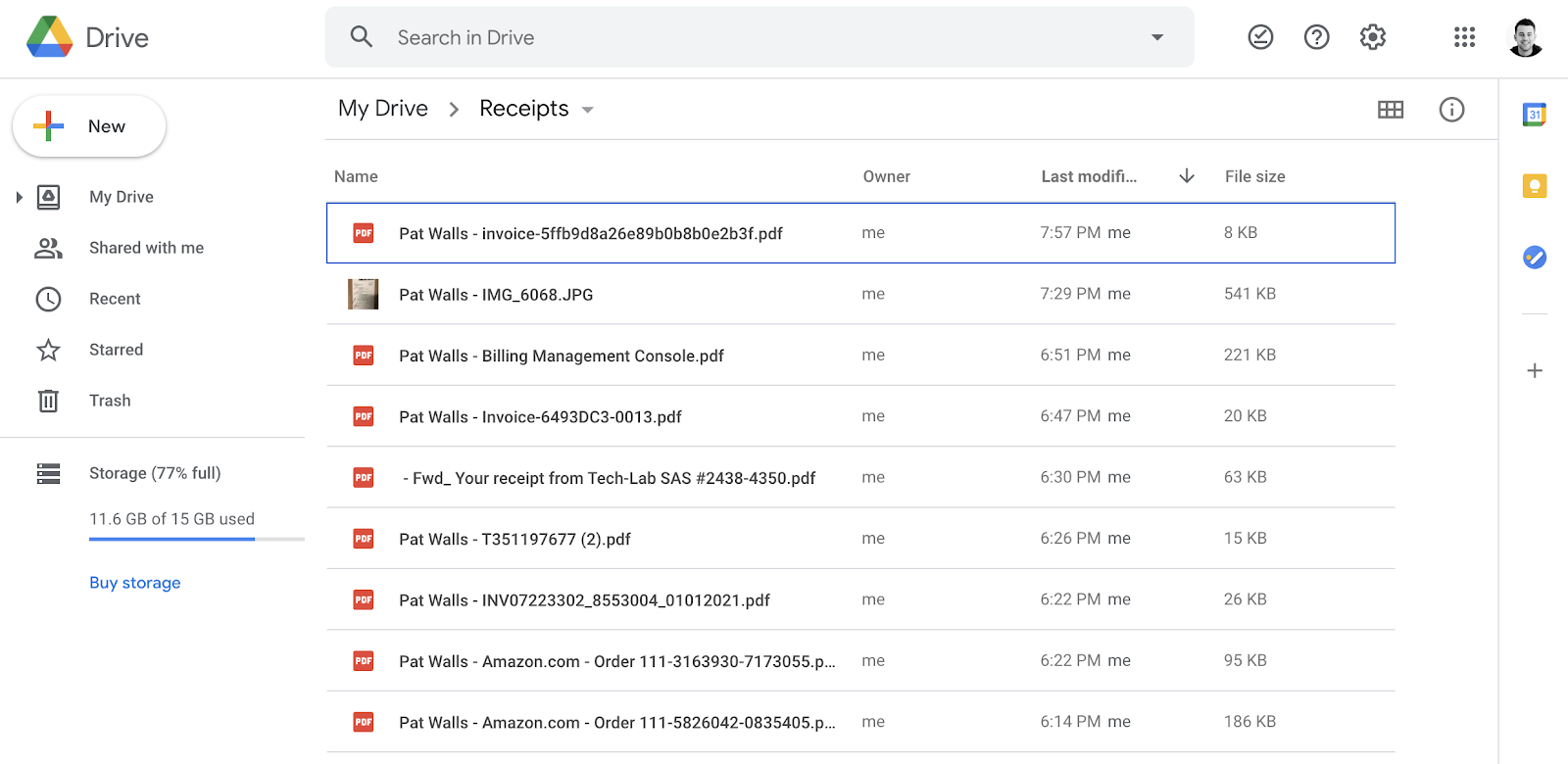
I wanted to find a better way to “automate” saving receipts. I started building something in Zapier for this:
Anytime I have a receipt, I email it as an attachment to this email address:
patrickswalls+expenses@gmail.com
I set up a filter in Gmail to automatically skip the inbox if it’s coming TO this email:
The Zapier logic is set up to look under the Receipts folder for any emails WITH an attachment. If it finds one, it uploads it automatically to Google Drive:
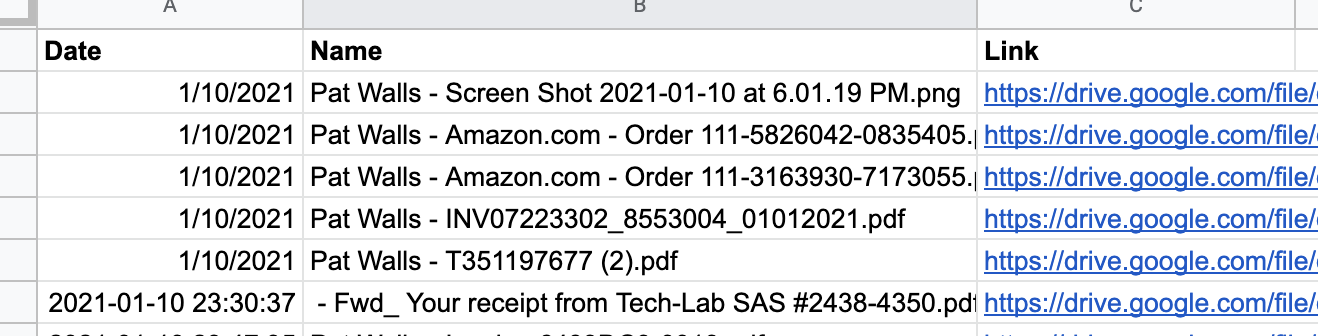
After it uploads to Google drive, it also updates inside my expenses tracking spreadsheet with a link directly to the Google drive file.
That way, I can easily attribute it to the expense from my credit card.
Picture Receipts
When I take a photo on my iPhone of a paper receipt, I can simply email it to that same email address, and it will also upload to the Google Drive.
Non-attachment receipts?
If you ever get an email with the receipt in the body of the email? Simply forward it to pdfconvert@pdfconvert.me. They’ll convert the email to a PDF and send it back to you, for free. I set up another filter to handle that:
Harry Dry told me I should focus more on the newsletter for Starter Story. As it’s nearing 50K subscribers, it may be the most valuable thing I have.
I think he’s right, but now I need to figure out the "right" way to focus on the newsletter, what’s going to be on it, and what the vision for it is.
That’s why I’m writing this right now.
The hardest part about any newsletter is the insane amount of work that it takes to make it really, really great. It’s easy to slip into making it “just OK” over time.
A newsletter takes work, every week. So what I want to figure out is: How I can sustainably create a great newsletter…?
And I think the answer is to start leveraging my writing here on my daily blog. I already write every day.
But that also means the Starter Story newsletter would be more about “me”. That is a good and a bad thing.
Good, because it would be higher quality and more thoughtful.
Bad, because it ties the Starter Story brand to me. It maybe becomes a more personal brand.
But over the last few months, I’ve become less afraid of that. I see lots of people doing really well with their personal brands, i.e. Joe Rogan, MrBeast, Anthony Pomp, etc.
I think the only thing I can do is test stuff out over the next few weeks. This week, I tried the first "different newsletter" and it did pretty well.
We generated $1,600 in memberships from that newsletter. That alone gives me the motivation to keep working harder on the newsletter, and it justifies the work.
If you have any ideas, let me know.
I also think it’s interesting to have a "style" of the newsletter. Like, James Clear has the "321 Newsletter", which is actually quite simple.
The lesson there is that longer is not better.
I also am going to look a bit deeper into Pomp’s newsletter. What I think is interesting about Pomp is that he writes every day, kind of like me, but then shares it with a paid audience. Once a week, he does a free one.
The biggest question, for me, is how can I really enjoy doing the Starter Story newsletter? That is what is the most important piece to growth and monetization in the long run.
I think that also means the content will change. I will probably lose some subscribers. But that’s all part of figuring things out.